Marketing on Amazon
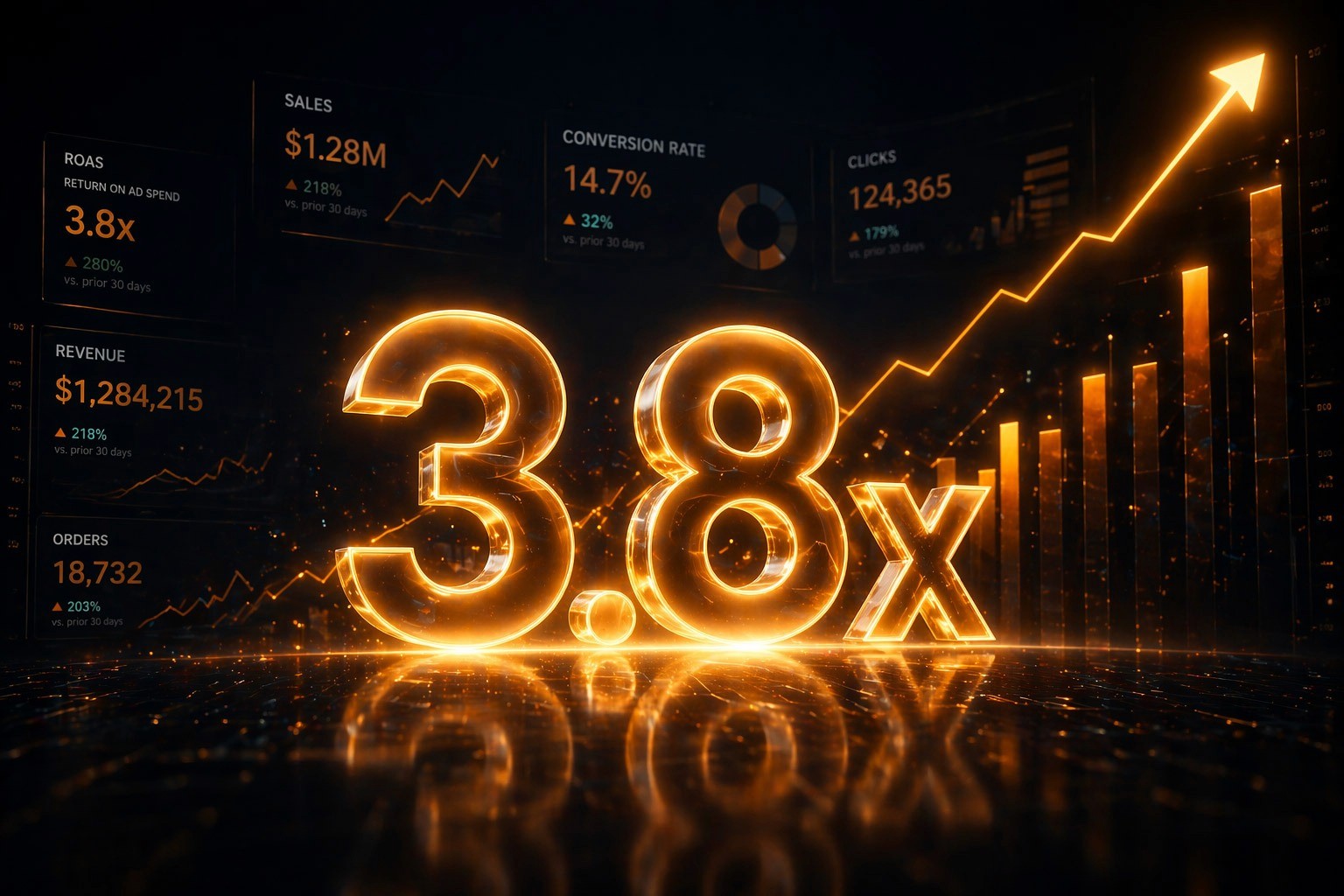
Prime Day and sponsored ads. Why a 3.8x ROAS should interest brands selling on Amazon?
Last updated: 27/04/2026
On average, EU advertisers recorded a return on ad spend (ROAS) of 3.8x while promoting their products using sponsored ads during Prime Day.
(Amazon internal data. ROAS measured from 14/07/2024 to 20/07/2024)
Prime Day once again confirmed its position as one of the most important sales events of the year on Amazon. For brands actively using sponsored ads, it was a time of exceptional opportunities – intense traffic, increased conversion and record sales results.
Table of Contents:
Context and Importance of Prime Day
Key Drivers of ROAS Growth During Prime Day
What to Look Out for When Planning Prime Day Campaigns
ROAS Growth Analysis and Effect Pathway
How to Put This Data into Practice?
FAQ - Frequently Asked Questions
You will read this article in 4 minutes.
Context and Importance of Prime Day
Prime Day has been one of the most important shopping moments on Amazon for years. In a short period of time, the platform records a several-fold increase in traffic, and consumers are more inclined to buy – often already having prepared lists of products they want to purchase on promotion.
In 2024, Prime Day once again showed that brands actively investing in sponsored ads gain a significant competitive edge. An average ROAS of 3.8x shows that well-planned advertising campaigns can pay off multiple times over in just a few days of the event.
Key Drivers of ROAS Growth During Prime Day
Increased Traffic and Conversion
During Prime Day, traffic on the Amazon platform multiplies. This is a moment when consumers are intent on buying, not just browsing offers. The increased number of visits and higher propensity to buy directly impact the improvement of the conversion rate.
Enhanced Visibility
Sponsored campaigns allow products to stand out in a crowd of offers. During Prime Day, when competition is exceptionally strong, well-optimised ads help keep products at the top of search results and category pages. This in turn translates into higher ROAS and long-term ranking growth for ASINs.
Ad Revenue Growth
The combination of increased traffic, better conversion and appropriate budget management often results in double-digit growth in ad sales. In some analysed cases, sales growth reached as high as 136% compared to the week preceding Prime Day.
Acquiring New Customers
Prime Day attracts many new Amazon users who are making their first purchases on the platform or discovering new brands. For sellers, this is an opportunity not only for short-term sales, but also for long-term customer database building and brand loyalty.
What to Look Out for When Planning Prime Day Campaigns?
Click Costs (CPC)
Increased traffic and higher advertiser activity cause a natural rise in CPC bids. It is advisable to plan higher daily budgets in advance to avoid a situation where a campaign runs out of funds during peak shopper activity hours.
Greater Competition
Prime Day is an intense period for competitors too. Most brands increase their advertising spend. Standing out requires not only a larger budget, but also refined product content: attractive photos, descriptions and positive reviews.
Budget Planning
To make the most of Prime Day's potential, it is worth planning to gradually increase budget a few days before the event starts. This allows the system to better adapt campaigns and maximise exposure during highest-traffic days.
Get help from professionals: Amazon Ads Management
ROAS Growth Analysis and Effect Pathway
A ROAS increase to 3.8x means that every pound invested in advertising generated nearly four times as much revenue on average. By comparison, in standard sales periods, the average return on sponsored ads in the EU can be 1.2-1.5x, meaning that during Prime Day, investment efficiency increases by 2 to 3 times.
The ROAS growth path is multi-stage and requires comprehensive preparation:
Product preparation – attractive photos, detailed descriptions, positive reviews and competitive pricing increase the chances of conversion.
Ad campaign optimisation – well-configured sponsored campaigns – automatic, manual, defensive and brand – increase product visibility.
Leveraging the period of increased traffic – thousands of buyers actively browse products, increasing clicks and potential conversions.
Budget and CPC management – proper spending planning allows visibility to be maintained during peak hours without running out of funds too early.
Only the combination of these elements – a well-prepared product and optimised ads – leads to a significant increase in ROAS.
How to Put This Data into Practice?
The 3.8x ROAS result shows that sponsored ads not only generate short-term sales, but also build long-term product visibility and ranking.
Sellers runing active campaigns during the Prime Day period often observe an improvement in organic positions after the event ends – which translates into better results in subsequent weeks.
What Does This Mean for Your Business?
Prime Day does not reward random initiatives. It rewards brands that prepare product, budget, campaigns and content beforehand. Simply increasing ad spend may not be enough if the product detail page does not convert, campaigns are poorly segmented, and the budget runs out during peak traffic hours.
Therefore, it is worth treating Prime Day not as a one-off event, but as a test of your entire Amazon sales ecosystem.
If you want to check if your account is ready for the next Prime Day, consult with us.
FAQ - Frequently Asked Questions
Are sponsored ads during Prime Day actually profitable?
Yes – data shows that an average ROAS of 3.8x means nearly a fourfold return on investment. This is significantly higher than during standard sales periods, where ROAS is usually 1.2–1.5x.
Why is ROAS higher during Prime Day?
This is due to a combination of several factors: increased traffic on Amazon, consumers' higher readiness to purchase and greater product visibility thanks to sponsored ads.
Is it enough to just increase the advertising budget to achieve high results?
No – budget alone is not enough. Comprehensive preparation is key: an optimised product detail page, an appropriate campaign structure, and budget and CPC control during peak traffic hours.
How does Prime Day affect long-term sales?
Active campaigns during Prime Day can improve organic rankings of products after the event concludes, which translates to better sales results in the following weeks.
Does Prime Day help in acquiring new customers?
Yes – the event attracts new platform users, giving brands a chance not just for a one-off sale, but also for building loyalty and a customer database.
How to prepare an ad campaign for Prime Day?
Advance planning delivers the best results: gradually increasing budget before the event, optimising campaigns (automatic and manual) and refining product content.
Does competition during Prime Day significantly affect results?
Yes – most brands increase their ad spend, which drives up CPC. Therefore, highlighting your offer's quality and a solid advertising strategy is crucial.
What is most critical for achieving a high ROAS during Prime Day?
The synergy of efforts is of greatest importance: a well-prepared product, optimised ad campaigns, effective budget management and leveraging increased shopping traffic.
Sources
Go2Market