What is Amazon FBA?
Amazon FBA
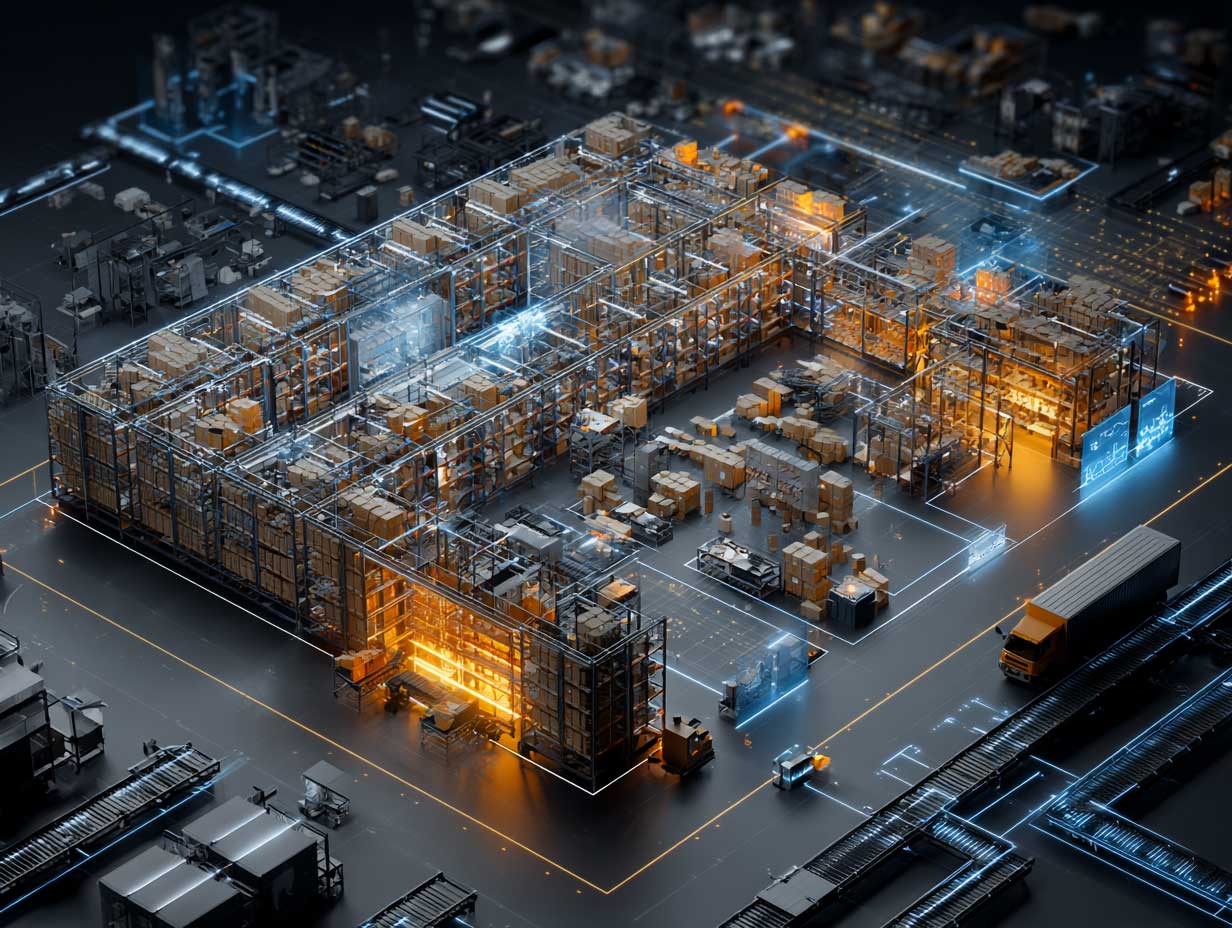
Amazon FBA is short for Amazon Fulfillment By Amazon. Behind this inconspicuous acronym lies a powerful machine under the Amazon brand, the heart of which is a network of warehouses scattered all over the world. It is from these that shipments of both Amazon products and sellers' goods are fulfilled. However, FBA is not just warehouses – it is also a sales model that enables the delivery of your products within 24h to millions of customers worldwide, as well as logistics technology of the highest level. It is a solution that has revolutionised e-commerce and is available to every Amazon seller.
Amazon FBA warehouses
You have certainly seen one of the giant Amazon warehouses on the outskirts of a Polish or European city. In Poland, Amazon FBA warehouses are located in Wrocław (2 warehouses), Poznań, and Kołbaskowo, with centres in Gliwice and, most likely, Okmiany in Lower Silesia currently under development.
FBA warehouses are huge – the centres in Wrocław alone have a total area of 95,000 m². Under their roof, products destined for Amazon's customers and your customers are stored and packed.
The products may belong to Amazon or to sellers who entrust their stock to FBA processing. The location of the warehouses is determined by geographical availability and logistical costs – so as to ensure delivery within 48h, 24h, or even on the same day.
The warehouses are divided into small-item and bulky/pallet warehouses. Some also have special features, e.g. Print on demand Cell (printing books to order) or garment customisation.
How do FBA warehouses operate?
FBA warehouses perform the typical functions of logistics centres: product intake, storage, picking, packing, and shipping.
The seller selects the FBA option, prepares the products, and ships them to the warehouse in accordance with the shipping plan (Shipping Plan in Amazon Seller Central).
Once received, Amazon can distribute the goods among different warehouses – under the FBA or PAN FBA model – the decision is made by Amazon.
When an order is placed, the warehouse picks, packs, and ships the product to the customer. Returns also go to FBA. What is more, customer service in the relevant language is handled by Amazon staff, and the seller is only involved if Amazon cannot answer the buyer's question.
What are the costs of FBA?
The costs of the FBA service depend on the size, specifics, and storage time of the products. They mainly consist of:
Product dimensions – meaning the volume occupied in the warehouse (billed monthly).
Shipping cost – depending on weight, dimensions, and type of packaging.
Special requirements – e.g. additional packaging or special storage.
To FBA or not to FBA – that is the question?
Advantages of FBA:
Reaching Prime customers = higher sales.
No need for your own warehouse, equipment, and staff.
Handling of returns by Amazon – without the need to have a local address.
Customer service in the language of the target marketplace.
Negative feedback regarding shipping and customer service is automatically removed by Amazon.
Challenges of FBA:
Requirement to register for and pay VAT in the country where the goods are stored.
Unit costs may be higher than under the FBM model (depending on the product).
Need for good inventory management – storage beyond 6 months incurs substantial extra charges.